How much does a Squarespace website cost in the UK?
A Squarespace website costs £12 to £79 a month in the UK billed yearly (Basic £12, Core £17, Plus £29, Advanced £79), or £16 to £89 a month billed monthly, plus your domain and any paid extensions. Wix shows its prices by location, so check its UK plans page before comparing. Over five years a Squarespace Core plan comes to about £1,020; a custom WordPress build (£499 with us) plus £20 a month managed hosting comes to £1,699, and you own the site.
| Squarespace plan | Billed yearly | Billed monthly |
|---|---|---|
| Basic | £12 a month | £16 a month |
| Core | £17 a month | £24 a month |
| Plus | £29 a month | £36 a month |
| Advanced | £79 a month | £89 a month |
Prices checked October 2026 on Squarespace’s pricing page (GBP). Wix’s UK prices could not be confirmed today, so they are not quoted here.
What you are actually buying from each
Both are hosted subscription builders: the software, hosting and templates come bundled, and the site exists only while you pay. Squarespace’s templates are art-directed and hard to make ugly, which suits portfolios, studios and food businesses that live on imagery. Wix’s editor is looser, its app market bigger, and its willingness to let you drag anything anywhere is either freedom or rope depending on your design confidence. Neither requires code; both reward a full weekend of setup more than the adverts suggest.
Feature face-off
| Area | Wix | Squarespace |
|---|---|---|
| Templates | Huge choice, variable quality, locked once chosen | Fewer, consistently polished, switchable |
| Editor | Free-form drag and drop | Structured sections, harder to break |
| Apps and extensions | Large app market, quality varies | Curated, smaller, more predictable |
| Blogging | Adequate | Slightly stronger writing experience |
| E-commerce | Solid at small scale | Elegant at small scale, commission on cheapest plan |
| SEO basics | Covered | Covered |
| Support | Ticket and community heavy | Email and chat, generally responsive |
The five-year maths nobody runs
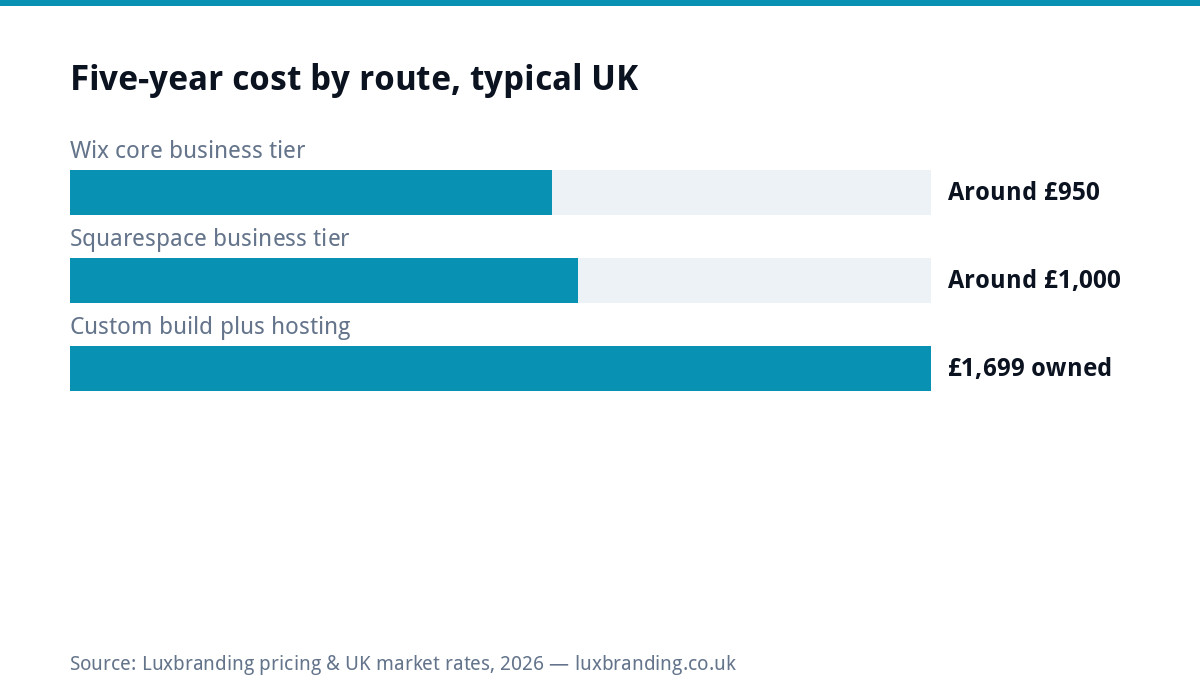
Subscriptions feel small monthly and large in aggregate. Using published annual-billing rates and our own public prices for the owned route:
| Route | Year one | Five years | You own it? |
|---|---|---|---|
| Wix core business tier | Roughly £190 plus domain | Roughly £950 plus domain renewals | No: cancel and it is gone |
| Squarespace Core plan (£17 a month billed yearly) | £204 plus domain | £1,020 plus domain renewals | No: cancel and it is gone |
| Custom WordPress build (£499) plus £20 a month managed hosting | £739 | £1,699 | Yes: files, content and design are yours |
The owned route costs more over five years in cash terms but the gap is far smaller than owners assume, and it buys an appreciating asset: custom design, no template ceiling, portability between hosts, and a site that survives any subscription decision. The full breakdown of that trade sits in Wix versus a custom website, and you can put your own numbers through the free website cost calculator.
E-commerce: read the fee small print
Card processing fees apply everywhere, on any platform. The differences: Squarespace charges a platform commission on sales on its cheaper plan, removed on higher tiers; Wix gates features like abandoned-cart recovery behind its upper commerce plans. A shop doing serious volume outgrows both fee structures quickly, which is when the sums in Shopify versus custom e-commerce become the relevant comparison instead.
SEO reality: fine for basics, a ceiling for growth
Both platforms handle titles, descriptions, sitemaps and redirects properly these days; the old “builders cannot do SEO” line is outdated. What remains true: you cannot tune server performance, control markup deeply, or scale structured content the way an owned WordPress site can, and against invested competitors those margins decide page one. A local trade wanting to be found for its name and town will be fine; a business that wants search as a growth channel will hit the ceiling and feel it.
The ownership question neither answers well
Stop paying Wix or Squarespace and the site ceases to exist. Exports are partial: text and images mostly, design and apps never. After three years of content, that lock-in is the real price of the low monthly fee, and it is why the cancel decision gets harder every year. An owned site inverts the power: hosts compete for your business because you can leave with everything. Owners who have lived through a builder price rise understand this viscerally; our guide on outgrowing a DIY website maps the escape route, and the GoDaddy builder review covers the same trap on a third platform.
Whichever builder you choose, the words take longer than the design. Our free website content planner prompts you for every page before you start.
When Wix is the right call
You want maximum layout freedom without code, you need a niche app its market happens to carry, or you are testing an idea that may not exist in six months. Wix rewards tinkerers and punishes perfectionists on deadlines. Set a launch date before you open the editor; the freedom is where weekends go to die.
When Squarespace is the right call
Your business is visual, you value taste over flexibility, and you would rather choose from forty excellent templates than four hundred mixed ones. Photographers, cafes, studios and makers get the most from it. Its discipline is a feature: it is genuinely hard to build something embarrassing.
When neither is the right call
You expect search to bring you customers, you sell at growing volume, you need anything bespoke (calculators, portals, integrations), or you simply want the asset on your balance sheet rather than on rent. That is the owned-site lane: our custom WordPress builds are a flat £499 with managed hosting at £20 a month, both on the public price list, and comparisons like AI builders versus custom cover the newer end of the template spectrum.
The extras bill: domains, email and apps
The advertised tier is never the whole invoice on either platform. A domain renews yearly on top; professional email at your domain is a separate subscription on both (typically via Google Workspace or similar at a few pounds per user monthly); and the app or extension that does the one thing your business needs often carries its own fee. Budget the realistic stack, not the headline: tier plus domain plus email plus one or two paid apps is the honest monthly figure, and it is usually half as much again as the price that drew you in. Our guide to business email costs covers doing that part properly on any platform.
Switching between the two later
Moving Wix to Squarespace or back is a rebuild, not a migration: content pastes across, design and store setups do not, and URLs change unless you map redirects carefully. If you are only weeks into a build and regretting the choice, switch now while the sunk cost is small. If you are years in, the switch worth considering is usually not sideways to the other builder but out to an owned site, because you pay the rebuild cost either way and only one destination ends the cycle.
A worked example: the therapist choosing
A counsellor needs five calm pages, online booking via an embedded calendar, and to be found for her name plus town. Squarespace fits: template discipline suits the tone, the booking embed drops in, and local-name searches do not need SEO firepower. Two years later she adds a second practitioner, wants to rank for “counselling [city]” against established clinics, and needs intake forms feeding a client system. That is the day the builder stops fitting, and the rebuild conversation starts, which is precisely why running the five-year numbers on day one, not day seven hundred, is the honest move.
For the whole market in one place, from DIY builders to full agency builds and the running costs after launch, see how much a website costs across the UK.
If the site needs to sell online, the platform question comes first: our guide to Shopify or WooCommerce in the UK covers costs, payment fees, control and which suits which business.
Sources
Published pricing referenced from the platforms’ own pages: squarespace.com/pricing, checked October 2026 in GBP, and wix.com/plans, checked September 2026 (Wix shows prices by location). Both are billed-annually rates; check current figures before deciding, as tiers and fees move. Our own prices quoted are the live public list.
Get the UK Website Project Brief Template (free)
A two-page template for briefing any UK web designer: sitemap, integrations, audience and deliverables. Cuts revision rounds in half.
No spam. UK GDPR compliant. We only use your email to send this resource, unless you tick the box to hear from us.
Frequently asked questions
How much does a Squarespace website cost in the UK? +
Squarespace costs £12 a month (Basic), £17 (Core), £29 (Plus) or £79 (Advanced) billed yearly, or £16 to £89 a month billed monthly, plus your domain and any paid extensions. Over five years the Core plan comes to about £1,020. Prices checked October 2026 on Squarespace's pricing page.
Which is cheaper in the UK, Wix or Squarespace? +
It depends on the plan and the extras. Squarespace runs from £12 a month (Basic) to £79 (Advanced) billed yearly; Wix shows its prices by location, so check its UK plans page. The real cost difference comes from apps, transaction fees on commerce plans and how long you stay subscribed, not the headline tier.
Is Wix or Squarespace better for SEO? +
Both cover the basics competently now: titles, descriptions, redirects, sitemaps. Neither gives you the control, speed tuning or content scale that wins competitive commercial terms, which is why builder sites plateau. For local visibility they are fine; for ranking against invested competitors they are the ceiling.
Can I move my site off Wix or Squarespace later? +
Not cleanly. Both let you export limited content, but designs, apps and store setups do not transfer, so leaving means rebuilding. Factor that lock-in into the decision: the subscription is easy to start and expensive to unwind after years of content.
Should a UK small business use a builder or pay for a custom site? +
If you have more time than money and need something live this week, a builder is rational. Once the business trades properly, a custom build (ours is £499) costs more over five years than a basic builder plan, but you own the site and can move it to any host.
Do Wix and Squarespace charge transaction fees in the UK? +
Card processing fees always apply on both. Squarespace additionally takes a platform commission on its cheaper plan until you upgrade, and both push you up tiers as your store grows. Read the commerce plan small print before choosing a home for a shop.