Quick answer: what a counsellor or therapist website costs in the UK
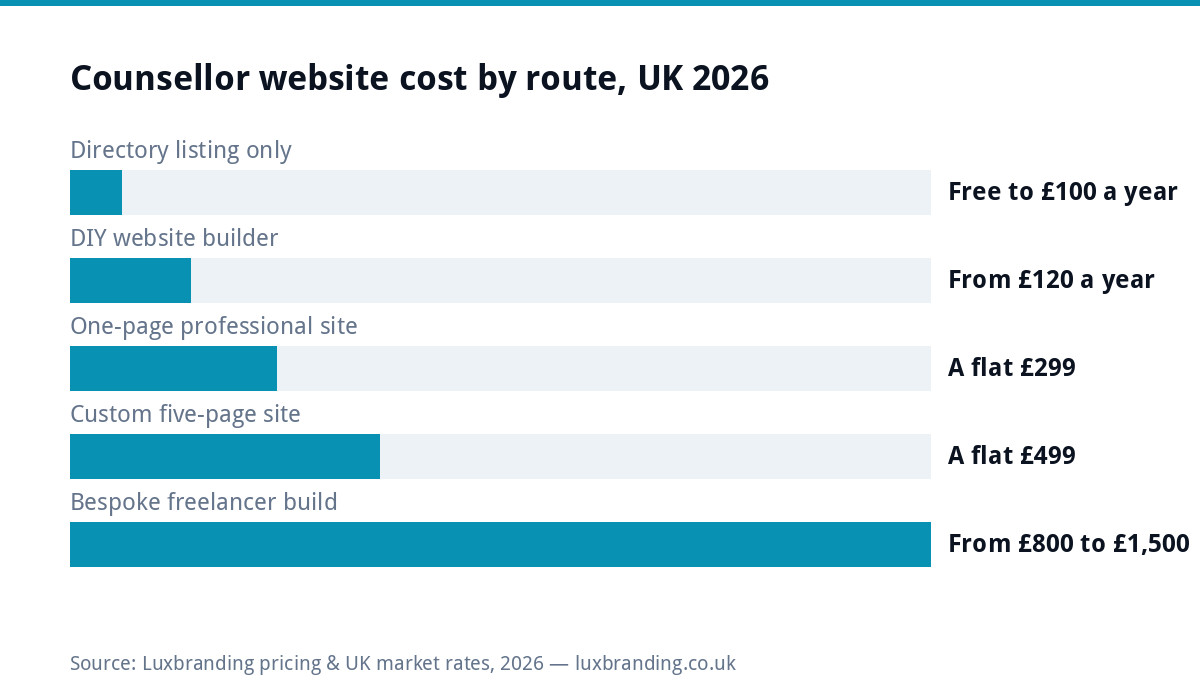
A professional counselling or therapy website costs between £299 and £1,500 in the UK in 2026. A one-page site that turns directory clicks into enquiries runs about £299, a custom five-page practice site is £499 at a fixed-price studio, and bespoke freelancer builds land between £800 and £1,500. A DIY builder subscription looks cheaper at £10 to £79 a month, but the yearly cost catches up with the one-off price fast, and the hours come out of client time. Ongoing running costs are modest: a domain around £15 a year and hosting with updates from £20 a month.
Why a directory listing alone stops working
Most counsellors start with a listing in the big directories, and they work: clients genuinely search there. But a listing is a comparison page. You appear as one card in a wall of near-identical cards, competing on a headshot and 150 words. The moment a potential client wants to know more, they look for a website, and if the search leads nowhere, a meaningful share quietly pick the counsellor whose site answered their questions at 11pm. The professional bodies themselves, BACP and UKCP, list thousands of members; your own site is what separates you from the other listings, not from the directory.
What a counselling website must do differently
Counselling sites carry obligations most small-business sites never think about. Confidentiality shapes everything: no chatty testimonial carousel, no client photos, no third-party chat widget quietly logging conversations. The tone has to feel safe before it feels persuasive, because the person reading may be anxious, grieving or in crisis. And practical clarity matters more than cleverness: fees, session length, location or online format, and what happens after someone reaches out. A site that answers those four questions calmly outperforms a beautiful site that hides them.
The four routes, priced honestly
| Route | Typical cost | Strengths | Watch for |
|---|---|---|---|
| Directory listing only | £0 to £100/yr | Real search traffic | You are one card among thousands |
| DIY website builder | £120 to £240/yr | Cheap to start | Your evenings, template look, privacy plugins DIY |
| One-page professional site | £299 one-off | Everything on one calm page | Less room for specialisms |
| Custom five-page site | £499 one-off | Pages per issue you work with, better search reach | Needs your input on wording |
| Bespoke freelancer build | £800 to £1,500 | Fully tailored | Quotes vary, check ongoing support |
What belongs on each page
The five-page anatomy that works for private practice: a home page that says who you help and how sessions work in the first screen; an about page with your photo, qualifications and registrations written like a person rather than a CV; a page per specialism, anxiety, couples, bereavement, because that is how people search; a fees and practicalities page with actual numbers; and a contact page with a short, low-pressure form. If that feels like too much, the one-page version compresses the same sequence into sections, which is why the £299 one-page format suits so many solo practitioners.
The testimonial problem, and what to use instead
Client testimonials sit awkwardly with counselling ethics, and BACP guidance steers members away from soliciting them. The good news is you never needed them. Trust on a counselling site comes from registration badges linked to your directory entries, clear training and experience, a genuinely warm photo, and writing that demonstrates you understand what the reader is carrying. A short paragraph that names the feeling someone arrives with does more than five anonymous quote blocks ever did.
Privacy, confidentiality and your contact form
Your contact form is the first confidential disclosure a client makes, so treat it that way. Collect the minimum: name, contact detail, a free-text box. Skip the marketing checkboxes. Make sure submissions travel to an encrypted mailbox you control rather than a generic plugin inbox, and say plainly on the page who reads messages and how quickly you reply. If you plan online sessions, name the platform you use. A privacy page written in plain English is both a legal requirement and, for this audience, a quiet trust signal, and NHS guidance on talking therapies is a sensible external anchor for what clients can expect from therapy itself.
Tone: warm, not clinical
The biggest rewrite we make on counselling sites is tone. Qualification-first writing reads as armour; the reader wants to know it is safe to talk to you. Lead with the human sentence, follow with the credentials. Short sentences help. So does writing to one reader rather than an audience. Keep the palette and imagery soft and real, and resist stock photos of people staring out of rain-streaked windows; calm interiors and honest portraits work harder.
Worked example: from listing to full caseload
A counsellor working two days a week alongside NHS work wanted to go full-time private. Starting point: a directory listing generating roughly four enquiries a month. We built a five-page site at £499 with pages for anxiety, couples work and bereavement, a fees page with real numbers, and a form that promised a reply within one working day. The directory listing stayed, now linking to the site. Within a quarter the same listing plus the site produced nine to eleven enquiries a month, and the specialism pages began appearing in searches the directory never ranked for. The site paid for itself before the first month of full-time practice ended.
Costs by situation
Newly qualified and building a caseload: start with the £299 one-pager and your directory listings, upgrade when the caseload justifies it. Established with a waiting list: the £499 build with specialism pages protects you when directories change their algorithms or fees. Group practice: budget £499 to £1,500 depending on how many practitioners need profiles, and add online booking only if your admin genuinely bottlenecks on scheduling, in which case see our guide to booking system costs. Full pricing context sits in our guide to UK website costs, and the website cost calculator gives you a range in a minute.
Running costs after launch
| Item | Typical cost | Notes |
|---|---|---|
| Domain name | £10 to £20 a year | Renew in your own name, always |
| Hosting and updates | From £20 a month | Managed plans cover security and backups |
| Directory listings | £0 to £100 a year each | Keep the ones that send enquiries |
| Email at your domain | £3 to £6 a month | Looks professional, keeps client email separate; up to three mailboxes are included with our £20 a month hosting |
| Content changes | £0 on a managed plan | Fee changes and new specialisms stay current |
Red flags when commissioning
Three warning signs specific to this field. First, template mills that reuse the same soft-focus imagery across dozens of therapist sites: your site ends up interchangeable with the counsellor two towns over. Second, anyone proposing testimonial carousels or client success stories without flagging the ethics question; that tells you they have not built for this profession before. Third, contact forms wired to third-party marketing tools that store submissions on advertising platforms. Ask each supplier how they handle form data and where it lands; hesitation is your answer. A good build for this profession is quiet, fast, plain about fees and rigorous about where words travel.
What we charge
Our one-page website service is a flat £299 and our custom WordPress build is £499, both with content help, privacy-conscious forms and no surprise extras; every price is on the public price list. Physio and therapy practices budget similarly, and the physiotherapy section of our website cost guide covers the clinic-side considerations if your practice spans both worlds.
Get the UK Website Project Brief Template (free)
A two-page template for briefing any UK web designer: sitemap, integrations, audience and deliverables. Cuts revision rounds in half.
No spam. UK GDPR compliant. We only use your email to send this resource, unless you tick the box to hear from us.
Frequently asked questions
How much does a therapist or counsellor website cost in the UK? +
Between £299 and £1,500. A professional one-page site costs about £299, a custom five-page practice site £499, and bespoke freelancer builds £800 to £1,500. DIY builders run £120 to £240 a year plus your time.
Do I need a website if I am on BACP or UKCP directories? +
The directories bring searches, but you appear as one card among thousands. A website is where undecided clients go next; without one, a share of enquiries quietly goes to counsellors whose sites answered their questions.
Can I use client testimonials on a counselling website? +
Ethics guidance steers against soliciting them. Use registration badges, clear qualifications, a warm photo and writing that shows understanding instead; they build trust without compromising confidentiality.
What pages should a counselling website have? +
Home, about, one page per specialism (anxiety, couples, bereavement), a fees and practicalities page with real numbers, and a low-pressure contact page. Solo practitioners can compress this into a strong one-pager.
What are the running costs after the build? +
Around £15 a year for the domain and from £20 a month for hosting, updates and security if managed for you. There are no other required costs; directories are optional alongside.