Quick answer: yoga studio website costs
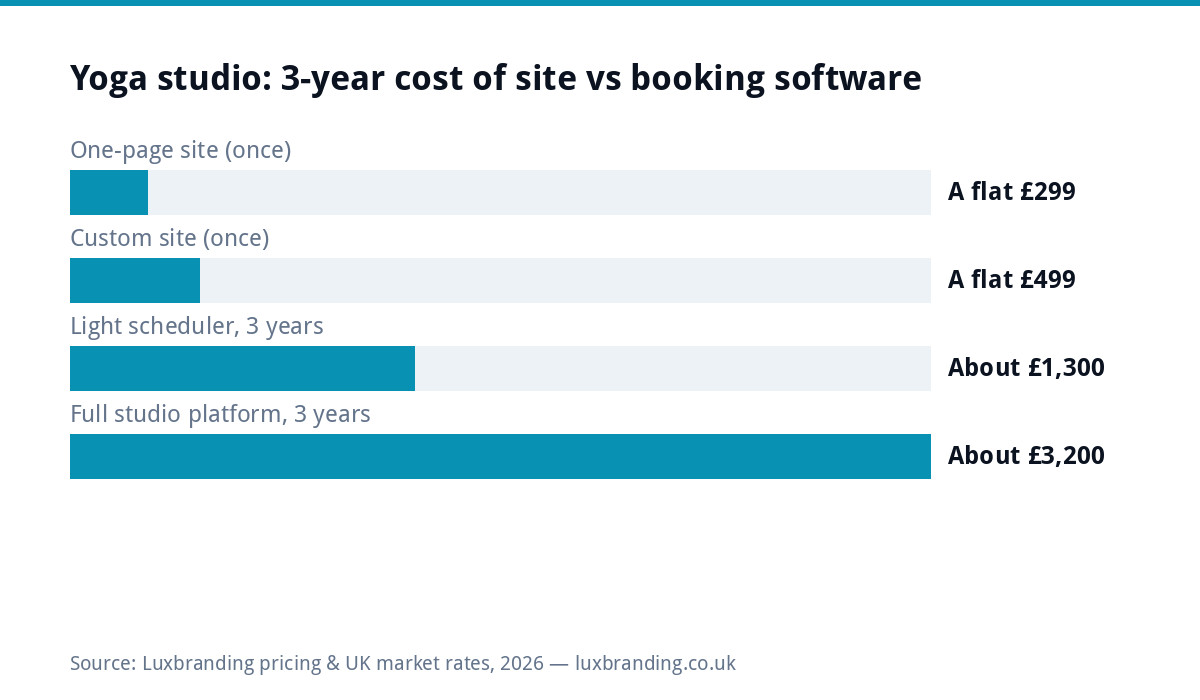
A yoga studio website costs £299 to £700 at fixed prices in the UK: our one-page build is £299 and a full custom WordPress site is £499. The bigger ongoing number is booking software at £30 to £130 a month, which is where studio budgets actually live. Freelancer and agency builds run £600 to £2,500. Domains cost £10 to £30 a year and managed hosting £20 a month on our managed plan; the full market picture is a minute away in the free website cost calculator, and every fixed figure is on the price list.
The real cost driver: booking, not building
Studio websites are unusual: the build is cheap, the plumbing is the subscription. Class timetables, passes, memberships, waitlists and cancellations all live in booking software, and platform pricing published openly, for example Mindbody’s own tiers, runs from tens to well over a hundred pounds monthly. Lighter tools cost £30 to £60. Over three years, a £90-a-month platform costs £3,240 against a £499 site: choose the platform with more care than the web designer, and make the site integrate rather than fight it.
Cost table: what studios actually pay
| Component | Typical UK cost | Notes |
|---|---|---|
| One-page site (fixed) | £299 | Intro offer, timetable embed, contact |
| Full custom site (fixed) | £499 | Class pages, teachers, retreats, blog |
| Freelancer or agency build | £600 to £2,500 | Varies wildly with scope |
| Booking platform | £30 to £130/month | The real long-term spend |
| Domain + managed hosting | £10 to £30/yr + £20/month | Updates and security handled |
The intro offer page: your conversion engine
New students do not buy memberships; they buy a low-risk trial. The studios that grow put the intro offer front and centre: one price, one button, one sentence of what happens next. Everything else, philosophy, lineage, teacher bios, supports that decision rather than replacing it. Structure the homepage so a complete beginner can go from landing to booked first class in under a minute on a phone. This single page usually outperforms every other marketing pound a studio spends.
Timetables that do not embarrass the brand
Most booking platforms offer embeddable timetables, and most embeds look like spreadsheets from 2011 dropped into a serene brand. The fix is in the build: custom-styled embeds, or timetable pages that restyle platform data to match your identity. This is exactly the sort of detail a custom build at £499 handles and template DIY does not. If the timetable looks rented, the whole studio does; the same lesson applies to gyms, as the gym section of our website cost guide shows, because class-heavy businesses face identical plumbing.
Retreat pages: the highest-revenue pages you will own
A weekend retreat at £395 a head with sixteen places is £6,320 through one page. Retreats deserve real product pages: day-by-day itinerary, accommodation photos, what is included, teacher story, past-guest words, and a deposit button rather than an enquiry form. Studios that treat retreats as Instagram announcements leave them half-sold; studios with proper pages sell out and build waiting lists. If retreats are part of your model, they justify the full-site route on their own.
Worked example: single-teacher studio, first premises
Leaving community halls for a leased space, she orders the £499 build: intro offer front and centre, styled timetable embedded from a £39-a-month scheduler, teacher page, workshops page, and a retreats template ready for spring. Domain £12, managed hosting £20 a month. First-year total roughly £990 plus booking fees. The intro offer converts fourteen new students in month one; at her £89 monthly membership, two of them cover the entire year’s web costs. The rest is margin the church-hall version never produced.
Photography and tone: the trap of borrowed serenity
Stock photos of lithe models in impossible poses repel the exact beginners studios need. Real photography, your room, your light, your students with permission, converts better precisely because it looks attainable. Budget £150 to £300 for a local photographer for a half-day, the same spend logic as any personal-facing business, and shoot classes, details and the empty studio. Warm real beats polished fake in this sector by a distance, and it costs less.
Ongoing costs and what to skip
Keep: domain, managed hosting at £20 a month, the booking platform that fits your size, and an email tool for class news, many studios start free-tier. Skip: custom apps, £3,000 agency rebuilds of what a £499 site does, and paid ads before the intro-offer page converts organically. Add later: gift vouchers online, workshop upsell emails and a simple blog for yoga-in-town search terms, which compounds quietly while you teach.
By situation: sensible spends
Teacher renting hall space: £299 one-pager with the intro offer and a lightweight scheduler; total setup under £350. First leased studio: the £499 build plus mid-tier booking; this is the sweet spot. Established multi-teacher studio: full site, retreat pages, styled membership funnel; your booking platform tier matters more than more web spend. Retreat-led business: full site with retreats as the hero product. Hot yoga or franchise: brand-heavy custom work can reach £2,500 sensibly; below that scale it rarely does.
Memberships vs class packs: pricing pages that sell both
Studios usually run three offers at once, drop-ins, class packs and memberships, and the pricing page’s job is steering without confusing. Lead with the membership, since it is the business model that keeps studios alive; frame packs as the flexible middle; let drop-ins exist without promotion. Show the per-class arithmetic honestly, a £89 monthly membership at eight classes is £11 a class against a £16 drop-in, because yoga customers do exactly this maths anyway and appreciate the studio doing it first. One page, three clear columns, one recommended option: pricing-page craft costs nothing extra in a proper build and moves real revenue every month thereafter.
Ranking for yoga in your town: the unglamorous wins
Studio SEO is refreshingly local. The wins: a Google Business Profile with weekly photos and every class type listed; a site that names your town naturally in titles and headings; class pages that answer real searches, beginners yoga, pregnancy yoga, hot yoga near me; and schema-marked timetables that search engines can read. Skip national keywords entirely, the studio five miles away is not your competitor and the platform aggregators own those results. Most towns have no studio doing even half of this, which is why a £499 site plus a tended profile routinely takes the top local positions inside two seasons and holds them.
Teacher pages and credentials worth showing
Students choose teachers as much as studios, so give each teacher a short page: training lineage, styles taught, a warm photograph and a sentence in their own voice. Display recognised accreditations plainly, teacher training hours and professional registration with bodies such as Yoga Alliance Professionals, since newcomers use them as safety signals even when they cannot judge the substance. Link each teacher to their classes on the timetable and the pages quietly become the studio’s best retention tool: students who know who they practise with rebook at visibly higher rates.
What to do next
Order the £299 one-page build or the £499 custom site with your booking platform integrated and styled. Undecided on scope? The free website cost calculator maps your requirements to honest numbers in under a minute, and our booking system cost guide covers the subscription side in detail.
Get the UK Website Project Brief Template (free)
A two-page template for briefing any UK web designer: sitemap, integrations, audience and deliverables. Cuts revision rounds in half.
No spam. UK GDPR compliant. We only use your email to send this resource, unless you tick the box to hear from us.
Frequently asked questions
How much does a yoga studio website cost in the UK? +
A studio site costs £299 to £700 fixed-price before booking software, £600 to £2,500 through freelancers and agencies. Booking platforms add £30 to £130 a month depending on tier. Our one-page build is £299 and a full custom site £499.
What booking system should a yoga studio use? +
Match the tool to your size: lightweight schedulers from around £30 a month suit single-teacher studios, while full studio platforms with memberships, passes and apps run £75 to £130 a month. The booking subscription usually exceeds the website cost within a year, so choose deliberately.
Does a yoga studio need its own website if it uses a booking app? +
Yes. Booking apps rent you a listing inside their brand; your site owns the first impression, the intro offer and the search rankings for yoga in your town. The pattern that works: your site sells, the booking platform processes.
What is the most important page on a studio site? +
The intro offer. New students decide studios on price-to-try, not price-to-belong. A clear £30-for-30-days style offer with one button outperforms beautiful philosophy pages every time, and the timetable comes second.
How much do retreat pages matter? +
For studios that run them, enormously: a £1,500 retreat sold to eight people through one page dwarfs months of drop-in revenue. Retreats deserve proper pages with itineraries, accommodation detail and deposits taken online, not an Instagram post and a DM.