
Quick answer
With a small budget, say £300 to £500 a month, put most of it into lead generation: reaching people who are already looking, through Google search, your Google Business Profile and a website that turns visits into enquiries. Keep a smaller share for awareness, and make everything look like one brand so both build on each other.
Awareness and lead generation are not rivals. They are two ends of the same journey. The question for a small business is the order to fund them in and how much to give each, and that depends on how people buy what you sell. This guide sets out the difference, suggested splits by situation and how to tell whether either is working.
What each term actually means
The jargon hides a simple distinction: are you reaching people before they need you, or when they need you?
| Brand awareness | Lead generation | |
|---|---|---|
| Who you reach | People who may need you one day | People who need you now |
| Typical channels | Social posts, video, sponsorship, van livery, leaflets, display ads | Google search ads, Google Business Profile, SEO, quote forms, directories |
| What success looks like | More people recognise and remember your name | Calls, quote requests, bookings, sales |
| How fast it pays | Months, sometimes years | Days to weeks |
| How to measure it | Searches for your business name, reach, direct visits | Tracked conversions and cost per enquiry |
| Risk on a small budget | Spread too thin to be remembered | Stops the moment spending stops |
Google’s guide to choosing the right campaign type reflects the same split: search ads reach people actively looking for your products or services, while display and video campaigns extend reach to people who are not searching yet.
Why small budgets lean towards lead generation
Awareness works through repetition. For someone to remember your name when the boiler breaks, they need to have seen it several times, and that takes either a lot of money or a lot of time. A business spending a few hundred pounds a month cannot buy that repetition across a whole region.
Lead generation does not need repetition. Someone searching “emergency electrician Derby” at 9pm needs one good result, not ten reminders. Being visible at that moment, with a page that makes it easy to call, turns a small budget into work far faster.
There is also cash flow. A new or small business needs this month’s enquiries to fund next month’s marketing. Lead generation pays back quickly enough to keep the cycle going.
Where awareness still earns its place
That does not make awareness a waste. It earns its place in three situations:
- Nobody searches for what you sell yet. A new product or an unusual service has no search demand to capture. People need to discover it first.
- The purchase is rare and considered. Kitchens, extensions and wedding services are researched over months. Being a familiar name when the shortlist is drawn up matters.
- The awareness is almost free. A liveried van, tidy workwear and a sign on site are seen thousands of times at no extra cost per view. For trades, these are the most efficient awareness spend there is. Our guide to branding for trades businesses covers them.
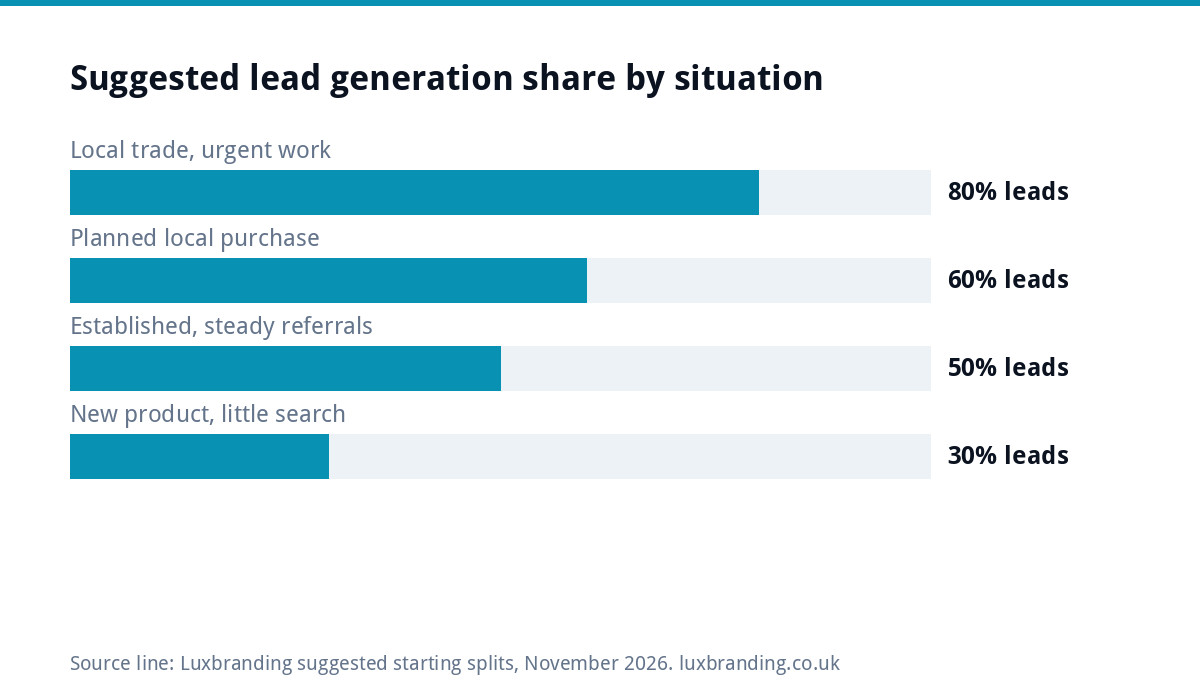
Suggested splits by situation
These are starting points, not rules. Adjust after three months of real results.
| Situation | Lead generation | Awareness | Where the money goes first |
|---|---|---|---|
| Local trade, emergency or urgent work | 80% | 20% | Search ads, Google Business Profile, van and workwear |
| Local service, planned purchase (kitchens, landscaping) | 60% | 40% | Search, project photos on social, local sponsorship |
| New product with little search demand | 30% | 70% | Social video, sampling, partnerships |
| Established business with steady referrals | 50% | 50% | Content, email to past customers, search for core services |
Whatever the split, the free channels come first: a complete Google Business Profile, a website that works on a phone, and asking happy customers for reviews. These cost time rather than money and support both goals.
Worked example: £400 a month for a local electrician
Take an electrician in Derby with a budget of £400 a month and most work coming from urgent call-outs and small domestic jobs. On the 80/20 split, about £320 goes on lead generation and £80 on awareness.
- Lead generation, about £320: nearly all of it on Google search ads for a handful of core services in the towns actually covered, sent to a page with the phone number at the top. The Google Business Profile is completed and kept active with photos of recent jobs, which costs time rather than money.
- Awareness, about £80: a small, steady spend on local social posts showing finished work, plus the van and workwear doing the heavy lifting for free every day.
After three months, the electrician compares cost per enquiry from the ads with enquiries from the profile, and checks whether searches for the business name have started to climb. If the profile is producing cheaper enquiries than the ads, some of the ad budget can move into improving it, more reviews and more photos. If branded searches are flat, the van and the website probably do not look like the same business yet, and that is the next fix.
The point of the example is the order of decisions, not the exact figures: fund the channels that reach people who are already looking, keep a modest awareness line running, then let three months of real data decide the next split.
Brand is the multiplier, not a third budget line
Here is the part that often gets missed. A consistent brand is not a separate thing to spend on; it is what makes both kinds of spending work harder.
When the van, the website, the quote PDF and the Google profile all look like the same business, every awareness impression makes the next lead cheaper, because the searcher recognises the name in the results and picks it over a stranger. When each piece looks different, the awareness spend is wasted, because nobody connects the van they saw with the website they found. Our article on a brand that looks inconsistent everywhere covers how to fix that.
That is why a brand identity is usually the best first investment before either budget grows. Our brand identity design is £299 and covers the logo, colours, typography, imagery and brand guidelines, so every later piece of marketing looks like it came from the same business.
How to measure each one
Lead generation is the easier to measure. Set up conversion tracking so that calls, form submissions and bookings are counted. Google’s guide to conversion measurement explains how purchases, sign-ups and phone calls can be recorded. Divide spend by enquiries and you have a cost per lead to compare channels.
Awareness is harder, but not impossible. The best free signal is how many people search for your business by name. Google Search Console’s Performance report shows the queries that bring people to your site; if searches containing your business name rise over a few months, awareness is growing. Other signals include direct visits to the website and new customers saying they “have seen your vans around”.
Channel by channel: which job each does
- Google search ads: lead generation, fast. Our Google Ads management can run campaigns for you.
- Google Business Profile: lead generation for local searches, and free to run. Our profile setup and optimisation is £199.
- SEO: lead generation that keeps working when you stop paying for clicks, but slower to build. Our SEO service is £249 a month.
- Social media posting: mostly awareness and trust, with occasional enquiries.
- Paid social ads: either, depending on the objective you choose.
- Van livery, signage and workwear: awareness, very cheap per view.
- Leaflets: mostly awareness, unless paired with a clear offer.
Mistakes that waste small budgets
- Boosting posts with no goal. Reach without a next step is the most expensive kind of awareness.
- Cutting awareness to zero. Pure lead generation gets more expensive over time if nobody knows your name.
- Judging awareness by this week’s enquiries. It is measured over months.
- Running ads to a website that does not convert. Fix the page before buying the traffic.
- Looking different in every channel. Inconsistent branding wastes both budgets at once.
A simple 90-day plan
- Weeks 1 to 2: make the brand consistent across van, website, profile and paperwork.
- Weeks 3 to 4: complete the Google Business Profile and set up conversion tracking.
- Month 2: put most of the budget into search ads for your core service, a small amount into awareness.
- Month 3: compare cost per enquiry by channel and check branded searches in Search Console.
- Then: move money towards what works, and keep a small, steady awareness line running.
If you want to see what a consistent brand and a lead-focused website would cost together, every price is on our pricing page, and our guide to how much branding costs puts those figures in context.
Get the UK SEO DIY Audit Checklist (free)
A 32-point checklist UK SMEs can run against their own website in an afternoon. Surfaces the quick wins before paying for a paid audit.
No spam. UK GDPR compliant. We only use your email to send this resource, unless you tick the box to hear from us.
Frequently asked questions
What is the difference between brand awareness and lead generation? +
Brand awareness reaches people before they need you, so they remember your name later. Lead generation reaches people who need you now and turns them into calls, quote requests or sales. Awareness pays back over months; lead generation pays back in days or weeks, but stops when the spending stops.
Should a small business spend on awareness or leads first? +
Usually leads first. A small budget cannot buy the repetition awareness needs across a whole area, while search ads and a strong Google Business Profile can win work from people already looking. Keep a smaller awareness share running, and use near-free awareness such as van livery and workwear.
How do I measure brand awareness without a big budget? +
Watch searches for your business name in Google Search Console over several months. If branded searches rise, more people know who you are. Direct visits to your website and customers mentioning your vans or signs are useful signals too. Judge awareness over quarters, not weeks.
Is a logo or brand identity worth it before I spend on ads? +
Usually yes. A consistent brand makes every ad, post and van more recognisable, so awareness spending makes later leads cheaper. Our brand identity design is £299 and covers the logo, colours, typography, imagery and guidelines, so each piece of marketing looks like one business.
What budget split should a local trade start with? +
A sensible starting point for a trade doing urgent work is around 80% lead generation and 20% awareness. Spend first on search ads and the Google Business Profile, with van livery and workwear covering awareness. Review after three months using cost per enquiry and branded search trends.