
Quick answer: removals website costs
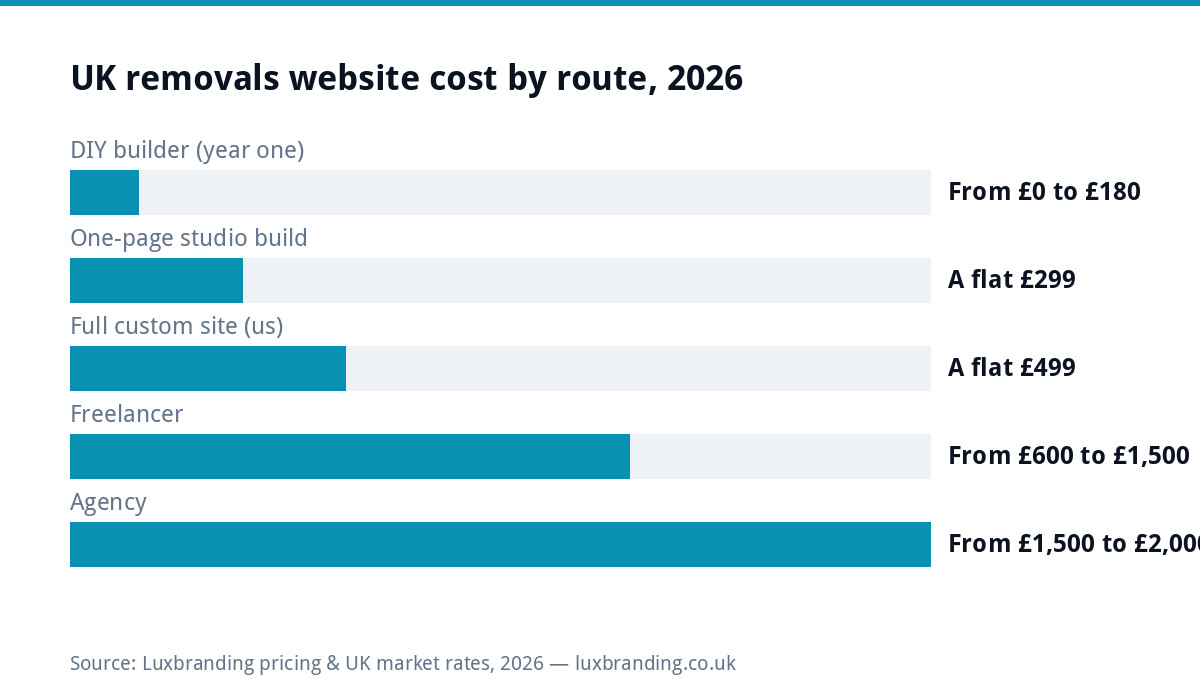
A removals company website that wins booked jobs rather than tyre-kicker calls costs £299 to £700 at fixed prices in the UK: our one-page build is £299 and a full custom WordPress site with a quality quote form is £499. Freelancer and agency quotes typically run £600 to £2,000. Ongoing costs are a £10 to £30 domain and roughly £20 a month for managed hosting and updates. All of our figures are public on the price list, and you can sanity-check any quote with the free website cost calculator.
What makes removals different from other trades sites
Two things: the quote is complicated, and the customer is comparing several firms in one stressed evening. A plumber can price a tap swap on the phone; a removals firm pricing a three-bed with a piano and a third-floor flat at the far end cannot. So the website’s real job is capturing enough detail to quote accurately, while looking trustworthy enough that the customer bothers. Get the form right and you spend your evenings quoting real jobs instead of chasing half-details by text.
Cost table: your realistic routes
| Route | Upfront | Best for | Trade-off |
|---|---|---|---|
| DIY builder | £0 to £180/year | Man-and-van side hustle | Weak forms, slow templates, your time |
| One-page studio build | £299 | New firms, one crew | Limited ranking surface |
| Full custom site | £499 | Established firms | Needs real content input |
| Freelancer | £600 to £1,500 | Specific custom needs | Support continuity risk |
| Agency | £1,500 to £2,000+ | Multi-branch operations | Cost rarely justified under that scale |
The quote form: where jobs are won and lost
The best removals forms walk a line: detailed enough to quote from, short enough to finish. The fields that earn their place: postcodes both ends, property size and type, floors and parking access at each end, date and flexibility, packing service wanted, and special items. Add optional photo or video upload for large jobs; firms report it transforms accuracy on big moves. Then respond fast: the firm that quotes first, wins disproportionately often. A £499 build with this form done properly beats a £2,000 site with a generic contact box.
Trust: BAR, insurance and the anxiety of moving day
Customers are handing strangers everything they own. Meet that anxiety head on: British Association of Removers membership displayed with your number, since BAR carries vetting, standards and an ombudsman-backed dispute scheme; goods-in-transit and public liability insurance amounts stated plainly; real crew photos, not stock movers in matching polos you do not own; and reviews that mention specifics, the piano, the rain, the fourth-floor sofa. Consumer bodies tell movers to compare at least three accredited quotes, and published market research from comparison services such as Compare My Move puts typical three-bed move costs around £1,200, which is exactly the spend level at which customers check credentials hardest. Wearing the accreditation visibly converts the exact customers worth having.
Content that ranks and pre-sells: van sizes and guides
Removals has a content advantage most trades lack: customers genuinely research. Pages that earn rankings and trust simultaneously: a van-size guide with what fits in a Luton versus a 7.5-tonner; a what-does-a-move-cost explainer with honest ranges; a packing guide; and route pages for corridors you actually run, with real timings. This is the difference between a brochure and an asset, and it is why the £499 custom WordPress build with room for content beats the one-pager for firms past their first year. The wider trades context sits in our tradesman website cost guide.
Worked example: two-van firm replaces directory spend
A family firm running two crews spends £460 a month across lead directories, paying per lead shared with four competitors. They order the £499 build: proper quote form, BAR badge, van-size guide, three honest route pages, thirty reviews migrated. Managed hosting £20 a month. By month five, organic and Google-profile enquiries replace two-thirds of the directory spend: roughly £300 a month saved, on exclusive leads rather than shared ones. The site paid for itself before the season peak, which is the correct time to have done it.
Seasonality: time the build for winter
Completions cluster from late spring to early autumn, peak in August, and spike at month-ends year round. Search visibility takes months to build, and review velocity takes a season. The strategic implication is unglamorous: commission the site in November, not May. Winter builds rank by spring, capture the peak, and let you photograph real summer jobs for next year’s content. Firms that rebuild mid-peak pay twice: once for the site, once in the disruption during their revenue window.
Ongoing costs and the add-ons worth having
Essentials: domain £10 to £30 a year, managed hosting and updates £20 a month, done. Worth adding when ready: call tracking so you know which pages ring the phone; a review pipeline that asks every completed move; and email follow-up for quotes not yet accepted, since moving dates slip and the firm still in the inbox wins the rebook. Skip: expensive booking engines, removals jobs need human quoting, and paid directory tiers once your own site converts.
By situation: what to buy
Man and van starting out: £299 one-pager, Google profile, ten reviews; that is a complete system. One-crew firm going full time: the £499 build with the real quote form; stop sharing leads. Established family firm: full site plus route pages and content; you have the reviews and history to dominate locally. Specialist, pianos, labs, fine art: dedicated service pages with case studies; specialist searches convert at premium rates. Multi-branch: genuine per-branch pages with local proof, and this is the one case where agency-tier spend can be argued.
Reviews: the currency of the moving trade
Nobody moves house twice a year, so almost every customer is new, and almost every decision leans on other people’s experiences. Build the pipeline deliberately: ask on completion day while goodwill is highest, send the direct link that evening, and answer every review including the awkward ones, because your reply is read by the next hundred browsers. On the site, quote specifics rather than star counts: the upright piano, the rain-soaked Friday, the fourth-floor flat with no lift. Specific reviews read as true. A firm with forty detailed reviews and a £499 site will out-convert a firm with a £2,000 site and silence, every season, in every postcode it serves.
The homepage, in the order that converts
Removals homepages work when they answer questions in the order customers ask them. First screen: who you are, where you operate, and the quote button. Second: trust, accreditation, insurance, review highlights. Third: services, house moves, flats, packing, storage, each linking to its page. Fourth: the process in four steps, because moving-day anxiety is really process anxiety. Fifth: areas and routes. Last: the quote form again, since scrollers have earned the second ask. Every element the customer does not need on that journey, awards from 2011, stock handshakes, autoplaying vans, is weight the page carries for nobody, and cutting it is free conversion optimisation.
What to do next
Order the £299 one-page build or the £499 full site with the quote form built for removals jobs. Or price your specific requirements in a minute with the free calculator, no email required. Winter is the right time; the season rewards firms that moved early.
Get the UK Website Project Brief Template (free)
A 2-page template for briefing any UK web designer — sitemap, integrations, audience, deliverables. Cuts revision rounds in half.
No spam. Unsubscribe any time. UK GDPR compliant — your email is only used to send this resource.
Frequently asked questions
How much does a removals company website cost? +
A professional removals site costs £299 to £700 fixed-price, £600 to £2,000 from freelancers and agencies. Our one-page build is £299 and a full custom WordPress site with a proper quote form is £499. Ongoing hosting and maintenance runs about £20 a month managed.
What should a removals quote form ask? +
Enough to price honestly without exhausting the customer: moving from and to, property size, floors and access, moving date flexibility, and packing needs. Photo or video upload helps big-job accuracy. Every extra field costs completions, so ask what changes the price and nothing else.
Is BAR membership worth showing on the website? +
Yes, prominently. British Association of Removers membership carries vetting, insurance standards and a dispute scheme, and it is the trust mark customers moving house are told to look for. Pair it with your insurance details and genuine reviews.
Do removals companies need per-town pages? +
Only for areas you genuinely serve and want to rank in. A handful of honest area pages with local detail beats fifty thin duplicates, which modern search treats as spam. Route pages, like London to Manchester moves, often work better than town pages.
When is the busy season for removals websites? +
Late spring through early autumn, with August the classic peak, plus end-of-month spikes year round. Launch or refresh the site in winter so rankings and reviews are in place before the season, not during it.