Quick answer
Instagram ads have no fixed price: you set the budget and Meta’s auction decides its reach. Meta suggests starting with at least the equivalent of 5 US dollars a day for more than six days. For a UK small business, a first test of £5 to £10 a day for two weeks (£70 to £140) is a good start.
What you should pay depends on what a customer is worth to you, not on someone else’s average. This guide explains how Meta charges, how to work out an affordable cost per customer, budgets by situation, and the costs that sit outside the ad spend itself.
How Instagram ad pricing works
Instagram ads run through Meta, the same system as Facebook ads. You do not pay a set rate per ad. Instead, Meta’s guide to ad costs says the cost depends on ad quality, bidding strategy, performance goal, the type of budget you choose and the campaign objective, which it says plays a large role.
The budget is what you control. Meta describes two types:
- Daily budget: the average you are willing to spend per day. Meta may spend up to 75% more than this on a given day, but says spend will not exceed seven times your daily budget over a week.
- Lifetime budget: a total for the whole campaign, with daily spend varying but the total staying within it.
Meta recommends a budget that runs over at least seven days so it can learn from performance, and its starting suggestion is at least 5 US dollars over more than six days. Those figures are Meta’s, as stated at the time of writing in October 2026.
Boost a post or use Ads Manager
There are two ways to pay for reach on Instagram. Meta’s Instagram advertising page says you can boost any post to turn it into an ad, or use Ads Manager for more advanced campaigns across platforms.
| Boost a post | Ads Manager | |
|---|---|---|
| Where you do it | In the Instagram app, on an existing post | Meta Ads Manager, on a computer |
| Setup time | A few minutes | Longer; more settings to choose |
| Control over goal and audience | Basic | Full: objective, placements, audiences, schedule |
| Best for | Giving a post that already did well more reach | Enquiries, sales and anything you want to measure properly |
| Main risk | Paying for likes rather than customers | Wrong settings wasting budget early |
Boosting is a fine way to learn. Once you want enquiries rather than engagement, Ads Manager gives you the controls that make the budget work harder.
Work out what you can afford per customer
The most useful number is not what an ad costs, but what you can afford to pay to win a customer. Work it out once:
- Value of a new customer. The first sale, plus repeat business you can reasonably expect in a year.
- Your profit on that value. Take off materials, time and costs.
- The share you are willing to spend on winning them. Pick a share you are comfortable with; the example below uses a fifth.
A worked example: a nail technician’s new client spends £35 on a first set and returns about every four weeks, so roughly £450 in a year if they stay. If profit on that is £225 and the owner is happy to spend a fifth of it, the affordable cost per new client is £45. An Instagram campaign that brings new clients for less than £45 each is working; one that brings them for £120 is not, however good the likes look.
Budgets by situation
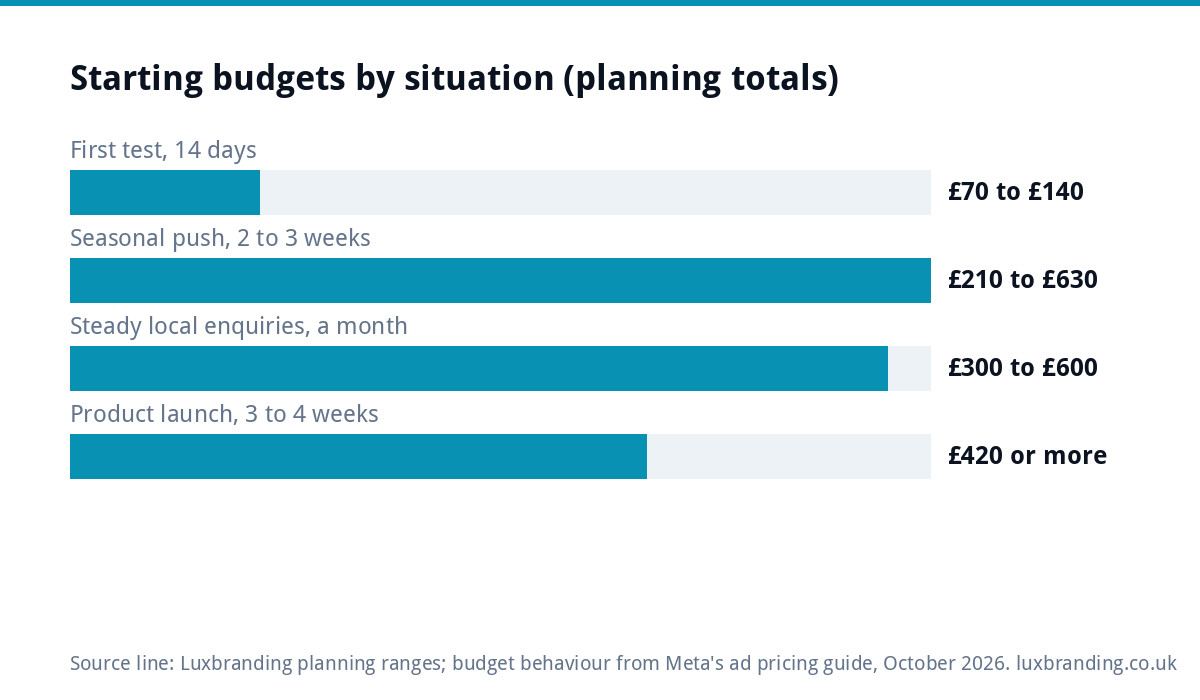
These are starting points for planning, not benchmarks. Your own cost per customer, measured over a few weeks, should replace them as soon as you have it.
| Situation | Daily budget to start | Run for | Total |
|---|---|---|---|
| First test, one offer | £5 to £10 | 14 days | £70 to £140 |
| Steady local enquiries | £10 to £20 | Ongoing, reviewed monthly | About £300 to £600 a month |
| Seasonal push or event | £15 to £30 | 2 to 3 weeks before the date | £210 to £630 |
| Product launch, online shop | £20 or more | 3 to 4 weeks | £420 or more |
A daily budget of £10 run for a month comes to about £300, and Meta’s weekly cap means a single week cannot run away beyond seven times the daily figure. If the first test produces nothing, change one thing, usually the offer or the image, before increasing the budget.
When a test does work, scale gradually. Raising a daily budget from £10 to £15 and watching the cost per result for a week tells you far more than jumping straight to £50. If the cost per new customer holds steady as the budget rises, keep going; if it climbs sharply, you have probably reached the people in your area who are most likely to respond, and the next step is fresh creative or a new offer rather than more money.
What pushes the cost up or down
- Objective. Asking Meta for messages or leads behaves differently from asking for views. Choose the objective that matches what you actually want.
- Creative. A clear photo or short video of real work, with one message, gives the system something people respond to. Tired creative gets more expensive over time.
- Audience size. Meta’s pricing guide notes that ad sets with at least 2 million people often perform better. Very local audiences are far smaller, so expect people to see your ad several times.
- Placements. Meta suggests adding at least six placements manually or turning on Advantage+ placements, rather than restricting ads to a single spot such as the feed.
- Where the ad leads. An ad that sends people to a slow or confusing page wastes the click you paid for.
The costs beyond the ad spend
Ad spend is only part of the cost. Budget for:
- Creative: photos, short videos and graphics. Our social media design service creates branded ad and post graphics, and a consistent look matters; see our guide to a brand that looks inconsistent everywhere.
- Somewhere to land: a page built for the offer. Our landing page design is £199, and a one-page website is £299 if you have no site at all.
- Management: your own time, or a fee if someone runs the ads for you. This is separate from the money paid to Meta.
Is Instagram the right place for your budget?
Instagram’s reach in the UK is large. Ofcom’s Online Nation 2025 report found it reached 78% of UK online adults in May 2025, 38.5 million people, with visitors spending an average of 20 minutes a day, and a strong skew towards 18 to 34-year-olds. That makes it a strong fit for visual, younger-skewing businesses such as beauty, food, fitness and fashion. For older audiences, the same Meta campaign can include Facebook placements as well.
Budget mistakes that waste the most money
- Judging after two days. Meta recommends at least seven days for a reason. Early results swing wildly; turning ads off on day two throws away what the system has learned.
- Changing everything at once. If you change the image, the audience and the budget on the same day, you cannot tell which change helped.
- Boosting for likes when you want bookings. The objective decides who Meta shows the ad to. Ask for engagement and you get engagement.
- Spreading a small budget across several ads. £5 a day split between five ads gives none of them enough to learn. Start with one or two.
- Forgetting the end date. A seasonal offer still running in February costs money and confuses customers. Set an end date or a lifetime budget.
Reading the results
Judge a campaign after at least seven days, on cost per result: cost per message, cost per lead or cost per sale, depending on your objective. Then match those results to real customers by asking how each new customer found you. Likes, follows and reach are useful signals about the creative, but they do not pay the bills. If you work with influencers or other businesses on paid posts, the ASA’s guidance on recognising ads on social media says it is likely to expect a prominent “ad” label upfront.
Getting help with Instagram ads
If you would rather not learn Ads Manager, our Facebook and Instagram ads service manages campaigns on Meta for small businesses; the service page explains what is included. If you want steady organic posting alongside paid ads, see our social media marketing management. Every fixed price we offer is on our pricing page.
Get the UK SEO DIY Audit Checklist (free)
A 32-point checklist UK SMEs can run against their own website in an afternoon. Surfaces the quick wins before paying for a paid audit.
No spam. UK GDPR compliant. We only use your email to send this resource, unless you tick the box to hear from us.
Frequently asked questions
How much do Instagram ads cost in the UK? +
There is no fixed price. You set a daily or lifetime budget and Meta's auction decides how many people it reaches. Meta suggests starting with at least the equivalent of 5 US dollars a day for more than six days. A first test of £5 to £10 a day for two weeks costs £70 to £140.
What is the minimum budget for Instagram ads? +
Meta's pricing guide suggests at least the equivalent of 5 US dollars over a duration of more than six days, and recommends running ads for at least seven days so the system can learn. In practice, a small UK business can test with a few pounds a day, but very small budgets take longer to show a reliable result.
Is boosting an Instagram post worth it? +
Boosting is a quick way to give a post that already did well more reach, and a good way to learn. It offers basic control, though, and can end up paying for likes rather than customers. Once you want enquiries or sales, Ads Manager lets you choose the objective, placements and audience properly.
Can Meta spend more than my daily budget? +
Yes, on individual days. Meta says it may spend up to 75% more than your daily budget on a given day, but that spend will not exceed seven times your daily budget over a week. If you need a hard total, use a lifetime budget, which keeps the whole campaign within the amount you set.
How do I know if my Instagram ads are working? +
Judge them after at least seven days on cost per result, such as cost per message, lead or sale, and match those results to real customers by asking how each new customer found you. Compare the cost per new customer with the amount you worked out you can afford to pay.