
Quick answer
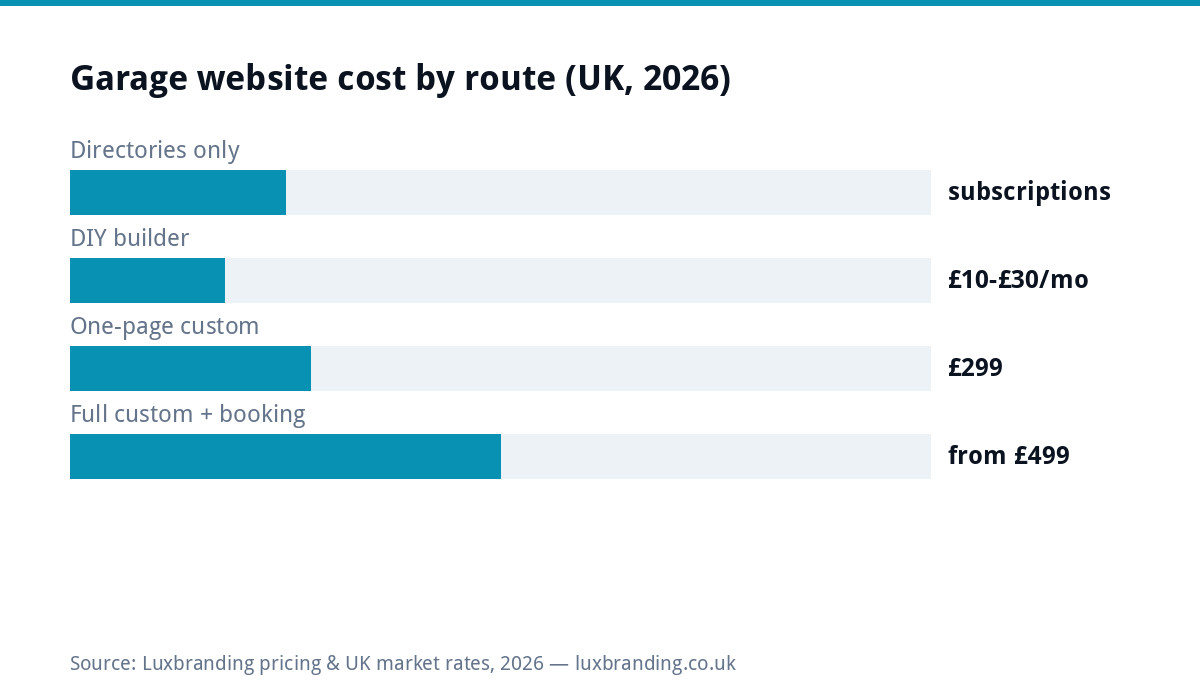
A garage website costs £299 flat as a custom one-pager or from £499 with a page per service line (MOT, servicing, diagnostics, tyres), which is the structure that lets each rank for its own searches. The sector’s three levers, covered properly below: publish the menu prices (drivers comparison-shop harder here than almost anywhere), display the trust layer drivers actually check, and make MOT booking effortless, because the MOT is the annual appointment that feeds everything else on the ramp.
How drivers actually choose a garage
The sector runs on two searches and one anxiety. The searches: “MOT [town]” and “garage near me”, both fiercely local, both decided in the Map Pack and the first results page. The anxiety: being ripped off, which decades of mystery invoices baked into the national psyche. That anxiety is the independent garage’s biggest opportunity (and once the site is live, keeping it patched and fast is what the £20/month management service exists for), because it is dismantled by transparency the chains do at scale and the silent independent never attempts: published prices, named mechanics, checkable approvals, reviews answered like a human. A driver comparing three tabs books the garage that answered their three questions (can I get in this week, what will it roughly cost, will they see me off) before they had to phone anyone. The website is where all three answers live, and the Business Profile is how the comparison finds you at all.
Route by route
| Route | What you pay | Right when | The catch |
|---|---|---|---|
| Directories only | Subscriptions | Interim visibility | Rented, generic, and your service menu is invisible |
| DIY builder | £10-£30/mo | Placeholder stage | Trust signals and booking usually end up half-built |
| One-page custom | £299 | Small general garage, phone-led booking | One ranking theme: fine for “garage [town]”, weak for service-level searches |
| Full custom + booking | from £499 | MOT station or multi-bay garage | Needs your menu prices and photos gathered first |
The pages that earn (garage edition)
The MOT page is the workhorse: “MOT [town]” is steady, legally-driven, annual demand. The page states your fee plainly (the DVSA maximum is public knowledge, so coyness reads badly), what happens on a fail, retest policy, and the booking route. Add the reminder angle: drivers can check any car’s MOT status on gov.uk, and a garage offering its own reminder service captures next year’s booking at this year’s visit. The servicing page carries menu pricing (interim from £X, full from £Y, what each includes) because service comparison is where drivers shop hardest. Diagnostics gets its own page (“engine management light [town]” is a real rescue-intent search family), and tyres too if you fit them. Each page is a search family the one-pager cannot chase, which is the entire case for the from-£499 tier, exactly as the general trades guide argues from the page-per-service rule.
The trust layer, itemised
Drivers check, so make checking effortless. Approval schemes with real standards behind them: The Motor Ombudsman codes of practice, Good Garage Scheme membership, any manufacturer or specialist accreditations, displayed with logos used per their rules and membership checkable. The human layer: photos of the actual workshop, the actual team with first names, the courtesy car fleet if you run one. The process layer: how you communicate (photo or video of the fault before work proceeds is the modern trust move, and garages doing it should say so loudly), written estimates, no-surprises wording. And the review layer: Google reviews embedded, every one answered, because in this sector the replies to complaints are read more carefully than the praise. None of this costs money beyond the build; all of it converts the anxious majority.
Booking: from form to diary
By volume, honestly. A small garage taking bookings by phone loses little with a simple form (“preferred date, registration, what you need”) answered same-day: that is £0 extra inside any custom build. An MOT station doing serious daily volume gains from real diary integration: slots shown, booked, reminded automatically, deposits optional, which is scoped work on top of the £499 build and follows the same arithmetic as every booked-service business in our booking system guide. The middle path most garages land on: form first, diary system when the form’s volume becomes its own admin job. The registration-number field matters more than it looks: it lets you check MOT history and quote informed, which impresses drivers before you have met them.
Worked example: the MOT anniversary machine
Composite: a two-bay independent builds the £499 site in spring, publishes MOT and service menu prices, adds the simple booking form, and starts capturing registrations. Months one to three: “garage [town]” and name searches land; MOT page starts placing for “MOT [town]” variants; a handful of extra bookings a week arrive, skewing MOT-first. The compounding part: every MOT captured this year is a reminder opportunity next year, and each MOT visit converts to services, brakes and tyres at the rate the trust layer earns. By the anniversary, the garage has a self-refilling book the directory listing never built, at zero marginal cost per booking. The realistic caveats: competitive towns take longer, the chains outspend everyone on ads, and none of it works if the phone goes unanswered at 8am when drivers call. The shape (slow, then compounding, then owned) is the reliable part, same as every vertical in this series.
The mistakes that keep garage websites invisible
The same faults recur across the sector, and every one is cheap to fix. The everything-page: MOTs, servicing, tyres, diagnostics and air-con crammed onto one homepage, so Google cannot rank the site for any single service search; the page-per-service structure above exists precisely to undo this. Prices hidden behind “call for a quote” in a sector where the anxiety IS the buying obstacle; the garage that publishes its service menu wins the comparison before the phone rings. Stock photos of German workshops nobody believes; a phone camera and ten minutes between jobs beats them permanently. The dead reviews section showing three reviews from 2021, which reads worse than none; the fix is the handover ask, made routine. No mention of courtesy cars, collection or waiting facilities, the exact tie-breakers drivers choose between equally competent garages on. And the unanswered form: a booking request that gets no reply by the next morning books elsewhere by lunch, so whoever opens the workshop opens the inbox. None of these need a rebuild; most are an afternoon of content honesty on the site you already have, which is why the diagnosis matters more than the invoice.
The stack and the timing
Site £299-£499. Profile setup £199 (or careful DIY), with categories set to the services you actually sell and the review habit running from day one. A review ask at every handover (“if the service was spot on, a quick Google review genuinely helps a small garage”). Signage and van consistency via the usual file discipline. Timing: build ahead of the March and September plate-change MOT bulges (three years after each new-plate surge, MOT demand spikes on the anniversary months), so rankings are settled when the wave hits. All prices on the public price list: fixed, published, which for a garage is not just our pricing model but a working demonstration of the transparency this whole page recommends.
Get the UK Website Project Brief Template (free)
A 2-page template for briefing any UK web designer — sitemap, integrations, audience, deliverables. Cuts revision rounds in half.
No spam. Unsubscribe any time. UK GDPR compliant — your email is only used to send this resource.
Frequently asked questions
How much does a garage website cost in the UK? +
A custom one-page site is £299 flat; a full site from £499 with separate pages for MOTs, servicing, diagnostics and tyres so each ranks for its own searches. Online MOT booking ranges from a simple form to a scoped booking build.
Do independent garages need a website? +
The searches that fill quiet weekdays ("MOT [town]", "garage near me", "car service cost") happen on Google and Maps, where an independent without a site barely exists. The garage that publishes MOT and service prices with an easy booking route wins the comparison against both the chain and the silent independent.
Should a garage publish its MOT and service prices? +
Yes. The MOT maximum fee is public anyway, drivers comparison-shop servicing hard, and menu pricing ("interim service from £89, full service from £149") converts searchers that "call for a quote" loses. Published prices also pre-filter the customers your rates do not suit.
What makes drivers trust a garage website? +
Checkable signals: independent approval schemes such as The Motor Ombudsman codes, manufacturer or specialist accreditations, real photos of the workshop and team, plain-English service menus, and Google reviews with replies. Distrust is the sector's default setting; the site's whole job is dismantling it.
Is online booking worth it for a small garage? +
For MOTs especially: they are date-driven, repeat annually, and drivers increasingly expect to book like they book everything else. A simple booking form costs nothing extra in a custom build; a diary-integrated system is scoped when volume justifies it.