Quick answer
Pet shop and pet food logos from us are £129, and all three layouts come in that price. It has to work on a shop fascia and a feed delivery van, but also on a 100 g treat pouch and a 12 kg kibble sack where the legal feed information takes up most of the label, and on the adverts that, for anyone selling animals in England, must carry a licence number.
This page is for independent pet shops, aquatic and reptile specialists, pet supply and feed stores, and small pet food and treat brands: raw food, baked dog biscuits, natural chews and the like. If you sell a broad range online and pets are just one category, our ecommerce logo guide covers the platforms and the unboxing in more depth.
Pet shop or pet food brand?
The two often overlap, as shops start their own treat range and food brands open a shop or a stall, but the logo works hardest in different places:
| Business | Who buys | Where the logo works hardest |
|---|---|---|
| Independent pet shop | Local owners, regulars who come in weekly for food | Fascia, paper bags, loyalty card, delivery van |
| Aquatics or reptile specialist | Hobbyists who travel for expertise | Website, livestock tank labels, social posts |
| Feed and country store | Owners of dogs, horses, poultry and livestock | Sack labels, yard sign, price boards |
| Treat or raw food brand | Owners shopping online and at shows | Pouch front, box label, marketplace thumbnail |
The licence on the wall and in every advert
If your shop sells animals, the licence shapes some of your branding. GOV.UK’s guidance on the licence for selling animals as pets in England says you need one if your business sells animals as pets, including when the business is run from home or sells online. Its conditions include displaying the licence clearly on the premises and displaying the licence number in any advertising.
What it means for your logo: a pet shop advertises everywhere from a Facebook post to a card in the vet’s window, so each advert template sets the horizontal logo above a footer strip that holds the licence number, and the mark itself carries no number at all.
Treat pouches and kibble bags: the label fills up before the logo arrives
Pet food has its own labelling rules, and they take up a lot of the pack. Business Companion’s trading standards guide to the retail sale of pet food, which covers England, lists what must appear, including the type of feed (for example complete or complementary), the species it is for, instructions for proper use, the name and address of the business responsible for the labelling, a batch or lot number and the net quantity. Raw pet food must also carry the statement “Use as pet food only. Keep apart from food.” along with handling instructions.
What it means for your logo: the feed type, species and raw-food statement claim the back or lower panel, so the brand panel at the top of a 12 kg sack takes the stacked logo, while a 100 g treat pouch may have room only for the icon and the product name on its front.
Scoop bins, own-brand bags and the shop’s prepacks
Many pet shops sell treats and food loose from scoop bins or jars, and pack some lines themselves. Business Companion’s guide says that for loose sales the labelling can be shown at the point of sale, with some details given to the buyer on or with the invoice, while each pack you make up yourself must carry the mandatory particulars. In practice, that gives you two branded items to design:
- Bin and jar labels with the icon, the product name and the feed information, laid out the same way on every bin so the wall of treats looks like one shop.
- A house prepack label for the bags you fill, with the stacked logo at the top and fixed spaces for the batch number and weight, which change with every fill.
What it means for your logo: because the particulars on a bin label and the batch and weight on a house pack change while the logo does not, the logo sits at one fixed size above the changing fields, and if you print those labels in-house, often in black only, the one-colour version with no fine fur or whisker detail is the file you will use most.
Our guide to product label design covers materials that cope with greasy treats and damp stockrooms.
Paw prints, bones and pet silhouettes
Pet businesses share a short list of images: a paw print, a bone, a dog and cat silhouette side by side, a heart with a paw inside it. They tell customers what you sell and nothing about why they should choose you. Some stronger ideas:
- Say what makes you different. A raw food brand, an aquatics specialist and a farm feed store have very different stories, and the mark can show that.
- Draw one animal well, in a style that is yours, rather than a stock silhouette. A single expressive line drawing of a dog’s ear or a cat’s tail can carry a whole brand.
- Use lettering with character. A name set in warm, distinctive type can be friendlier than any paw print, and it works on a sack, a fascia and a pouch.
The feed van and the local delivery round
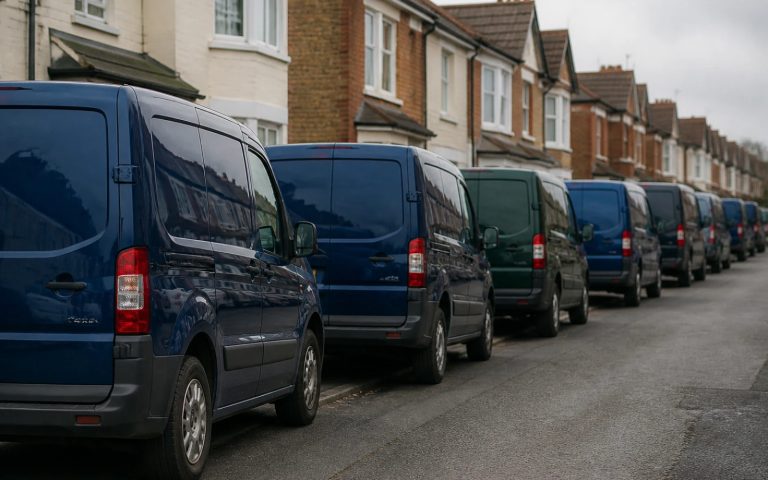
Many independent pet shops and feed stores deliver heavy sacks to local customers, which puts a van on the same streets every week. Livery is a separate design job, but the logo has to be ready for it: a bold horizontal version for the sides and a simple icon for the rear doors, both readable from across a road. Our guide to van signage and wrap costs covers fitting costs and common mistakes, and our Vehicle Wrap and Signage design starts from £99.
Dog shows, country fairs and the treat stall
Small treat and food brands often find their first loyal customers in person: at dog shows, agility events, country fairs and Christmas markets, where owners can let their dog try a sample. A stall at an outdoor event is seen from across a field and among dozens of other pet stalls, so the horizontal logo goes large on a banner along the top of the gazebo, and the icon goes on sample bags, stickers and a branded water bowl for visiting dogs.
For example, if a small baked-treat brand came to us selling at weekend dog shows and through its own website, we might design a mark built on a simple biscuit shape that doubles as the icon, a strong colour that stands out on grass and a stacked layout that fits the front of a 100 g pouch. The stall banner, the pouch and the website header would then all show the same mark, so someone who met you at a show can find you online that evening. Our Poster and Banner Design (£89) handles the stall banner.
£129, from the fascia to the treat pouch
Our Logo Design costs £129 with every layout. The horizontal version runs along the fascia, the van and the website; the stacked version sits at the top of food bags and sacks; the icon goes on treat pouches, scoop-bin labels, loyalty cards and your social profiles. Alongside them come a single-colour version for kraft bags and label printers, a 3D mockup and every file format. Concepts are unlimited, revisions within your brief are too, and the copyright is yours on delivery. Pouch and box artwork for a food range is a separate job through our Packaging Design service (£99); every other fee is on our pricing page.
Bringing a pet shop or food brand onto the new look
Start with what costs least and reaches most people: the social profiles, the website and the advert templates, updated together so the licence number line is correct everywhere on the same day. Then switch bin labels and house prepack labels as each batch is filled, and move food pouches to the new design at their next print run rather than throwing away stock. The fascia and van follow when budget allows. Customers rate us 4.8/5 Excellent, and first concepts reach you within 48 hours of your completed brief. Order your pet shop logo and start with the advert templates.