

Quick answer
A dental practice website costs from £499 as a full custom build from a general studio, or £2,000–£10,000 from dental-specialist agencies, whose premium buys sector familiarity rather than different technology. The £299 one-pager suits associates and pre-launch squats. The dental specifics that actually decide conversion (GDC-compliant claims, published private fees, fear-reducing photography, treatment pages that rank) travel with whoever builds it, and this guide covers what each should cost.
Why dentistry pays 4–10x for the same website
Dental marketing has a specialist-agency ecosystem, and its pricing reflects the sector’s spending power more than the work’s difficulty. What the premium legitimately buys: familiarity with GDC guidance, ready-made treatment page structures, and workflows that match practice software. What it does not buy: better WordPress, better hosting or different SEO physics. A practice that can supply its own content and photos gets the same commercial outcome from a competent general build at from-£499, with the compliance layer handled by checklist rather than by markup. The honest fork: single-site practices watching costs take the general route; multi-site groups buying a managed marketing programme are the specialist agencies’ real market, and that is a retainer decision more than a website one.
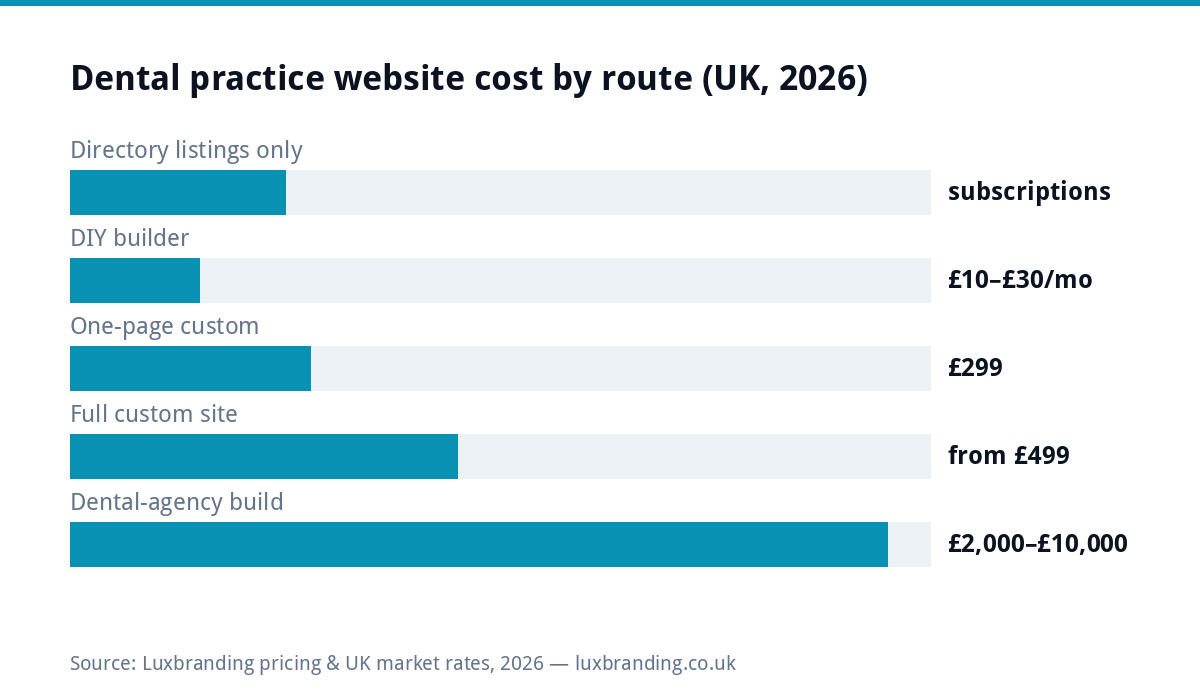
What each route charges and delivers
| Route | Typical fees | Right for | Watch out for |
|---|---|---|---|
| Directories only (dentists.co.uk-style + NHS listing) | Subscriptions | Interim visibility | Rented, generic, and your fees/story are absent |
| DIY builder | £10–£30/mo | Squat practice pre-launch | Compliance and treatment structure usually end up half-done |
| One-page custom | £299 | Associates, single-service clinics | One page cannot rank per-treatment |
| General studio, full build | from £499 | Most single practices | You supply the dental content; compliance by checklist |
| Dental-specialist agency | £2,000–£10,000 + retainer | Groups buying a whole marketing programme | The premium is familiarity; ask precisely what else |
The fee question: publish your private prices
The single highest-converting change on most practice sites costs nothing: publishing private fees, at least as honest from-prices. Fee anxiety is the dominant barrier to private enquiry; “whitening from £295, implants from £2,200, a written plan before anything begins” converts nervous searchers that “contact us to discuss fees” quietly loses. Transparency also aligns with the direction of regulatory travel on patient information, and it pre-qualifies: the patient who arrives knowing your Invisalign from-price is a consultation, not a negotiation. Structure it per treatment page rather than one buried PDF, keep it current (the same discipline our own price list runs on), and let each treatment page rank for its own “invisalign [town] cost” family of searches.
By situation: what to buy at each practice stage
Associate building a personal following: the £299 one-pager: who you are, where you practise, special interests, GDC number, contact. Squat practice pre-opening: one-pager now (position, register interest, recruit), full build for opening; the notify-list you gather is launch marketing money cannot buy. Established mixed practice: the from-£499 build with a page per treatment (that is how “emergency dentist [town]”, “dental implants [town]” and “hygienist appointments” each rank), NHS/private positioning stated plainly, and online booking wired to however you actually manage the diary, from embedded widgets to a custom-built booking flow with your deposit rules. Group or heavy-private practice: now the specialist-agency conversation can earn its premium, benchmarked against this page so you know what the baseline costs. Whichever stage: the Business Profile done properly (£199 or a careful DIY) often outranks the website itself for “dentist near me”, and reviews with thoughtful replies are the sector’s trust currency; our review response guide covers the hard ones, which in healthcare need extra confidentiality care.
Photography for practices: the fear-reduction shot list
Dental conversion is fear management, and photography does most of it before a word is read. The shot list a practice can complete in one morning: the exterior with signage (arrival anxiety: “will I find it?”), reception and waiting areas in daylight (calm, clean, human), each surgery looking modern but not clinical-cold, the team smiling in normal light with real names to follow (imagery and identity pull together, per our dental branding guide), and close-ups of the tech you invest in (scanners photograph beautifully and say “modern practice” wordlessly). What to avoid: stock models with impossible teeth (patients recognise them and read them as concealment), extreme close-up dentistry (reads as gore to nervous patients), and empty-room sterility with no humans anywhere. Practices that swap stock for real photos routinely see enquiry-form completion lift on the same traffic; it is the cheapest conversion work in the sector.
NHS, private, or mixed: say it plainly, high on the page
The single most-searched practical question about any practice: are you taking NHS patients? Whatever your answer, put it in plain words near the top (“Accepting new NHS patients”, “Private and Denplan only”, “NHS waiting list open for children”) rather than burying it in a fees page, because ambiguity costs both kinds of enquiry: NHS-seekers phone and disappoint everyone, private patients assume queues that do not exist. Mixed practices should say what each route includes and how the fees differ in shape, which pairs naturally with the published from-prices above. It is one honest sentence, it filters perfectly, and it spares reception the twenty calls a week that all ask the same thing.
Recall and retention: the website’s quiet second job
Acquisition gets the attention, but a practice’s economics live in recall: hygiene visits, check-up cycles, treatment-plan completion. The website supports it cheaply: an online rebooking route regulars actually use, treatment pages patients can be sent to after a consultation (“read about the implant process before you decide”, which converts better than a leaflet), and a fees page that makes plan-versus-pay-as-you-go comparison easy. Practices measure marketing by new patients; the site that also smooths recall pays twice on the same build.
Emergency and out-of-hours: the page nervous patients need at 2am
“Emergency dentist [town]” is dentistry’s highest-intent search, made by someone in pain right now, and it deserves its own page built for that state: what counts as an emergency, whether you see non-registered patients for emergencies (say plainly), out-of-hours arrangements or the NHS 111 route when you are closed, a from-fee so cost fear does not delay care, and the phone number everywhere. Practices with a genuine same-day slot system convert this search extraordinarily well; practices without one still earn goodwill (and future registrations) by being the site that told a scared stranger what to do at 2am. Either way it is one page, it ranks for the most urgent family of queries in the sector, and the £299 one-pager tier can even BE this page for an emergency-focused clinic.
The compliance layer, demystified
None of this needs to be scary, but it needs to be deliberate: claims accurate and evidenceable (the GDC’s advertising guidance is the reference), registration numbers and complaints route accessible, qualifications stated exactly, testimonials and before/afters used within the rules, and patient data handled properly on any form (a privacy notice that reflects reality, and the ICO basics for anything stored). A build that treats this as a first-class checklist rather than an afterthought is the real marker of practice-ready work, whatever the invoice says. Total for a launch-grade owned presence from the general route: site from £499, profile £199, photography a morning of the practice’s time; less than most specialist quotes’ deposit, everything on the public price list.
Get the UK Website Project Brief Template (free)
A 2-page template for briefing any UK web designer — sitemap, integrations, audience, deliverables. Cuts revision rounds in half.
No spam. Unsubscribe any time. UK GDPR compliant — your email is only used to send this resource.
Frequently asked questions
How much does a dental practice website cost in the UK? +
A custom practice site runs from £499 from a general studio; specialist dental agencies charge £2,000–£10,000 for comparable builds plus retainers. The premium buys sector familiarity, not different technology. One-page sites (£299) suit associates and squat practices pre-launch.
Why are dental website agencies so expensive? +
Sector-specialist pricing: they know GDC guidance, treatment page patterns and practice workflows, and price that familiarity in. The underlying work (design, WordPress, booking links, SEO basics) is the same discipline any competent studio delivers; whether the familiarity is worth 4–10x is the real question.
What are the GDC rules for dental websites? +
The General Dental Council expects websites to be honest and not misleading: accurate claims, professional qualifications stated correctly, GDC registration numbers accessible, clear complaint routes, and care with before/after photos and patient testimonials. It is a compliance layer any decent build accommodates; check the GDC's published guidance.
Should private treatment fees be on a dental website? +
Publishing at least from-prices for common private treatments (whitening, implants from, Invisalign from) converts markedly better than "call for a consultation", because fee anxiety is the biggest barrier to enquiry. CQC-registered practices also face transparency expectations. Honest from-pricing filters and reassures at once.
What matters most on a dental practice website? +
The things nervous patients check: real photos of the practice and team (fear reduction is conversion), clear NHS versus private positioning, treatment pages per service so each ranks, published private fees, online booking or an easy contact route, and reviews. Design polish supports these; it does not replace them.


